From relocating pesky bee colonies to protecting historic citrus trees, Facilities Services steers UC Riverside toward a healthier, more sustainable campus environment.
The department drives this transition by leading the campus’s proactive Integrated Pest Management, or IPM, program. This strategic framework controls pests safely with minimal environmental impact.
In March 2024, then UC President Michael V. Drake issued a proclamation giving all ten UC campuses 18 months to form an IPM committee and build a compliance plan. UCR quickly met this challenge. Having already drafted a comprehensive framework in 2017, Facilities Services worked to assemble a campus committee.
This committee brings together key campus partners to help carry out the plan. Collaborators include Agricultural Operations, Environmental Health & Safety, Housing Services, Dining Services, the UCR Library, and the Botanic Gardens.
While standard pest control focuses on immediate eradication, UCR's IPM program establishes a proactive standard operating procedure. Facilities Services combines biological, physical, cultural, and chemical tools to stop pest issues before they start.
To prevent pests, carpenters install door sweeps and seal structural gaps. Custodians eliminate food sources by streamlining trash removal, and plumbers place specialized flaps inside drains to block pipe access.
UCR’s local expertise also guides the broader UC system. John Starling, landscape supervisor, serves as UCR’s IPM Coordinator and chairs the systemwide Pesticide Oversight Committee, or SPOC. Tos Ishida, director of landscape services, serves as the alternate.
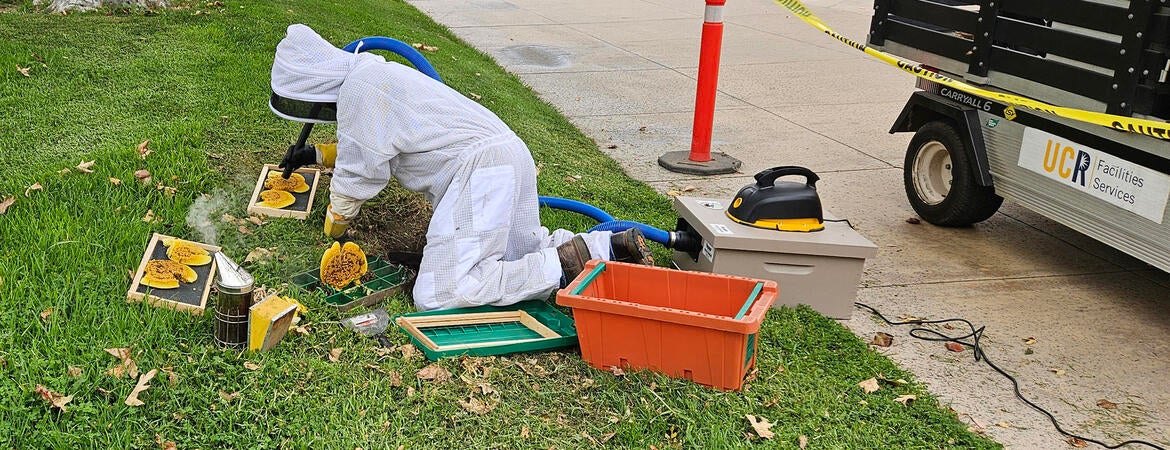
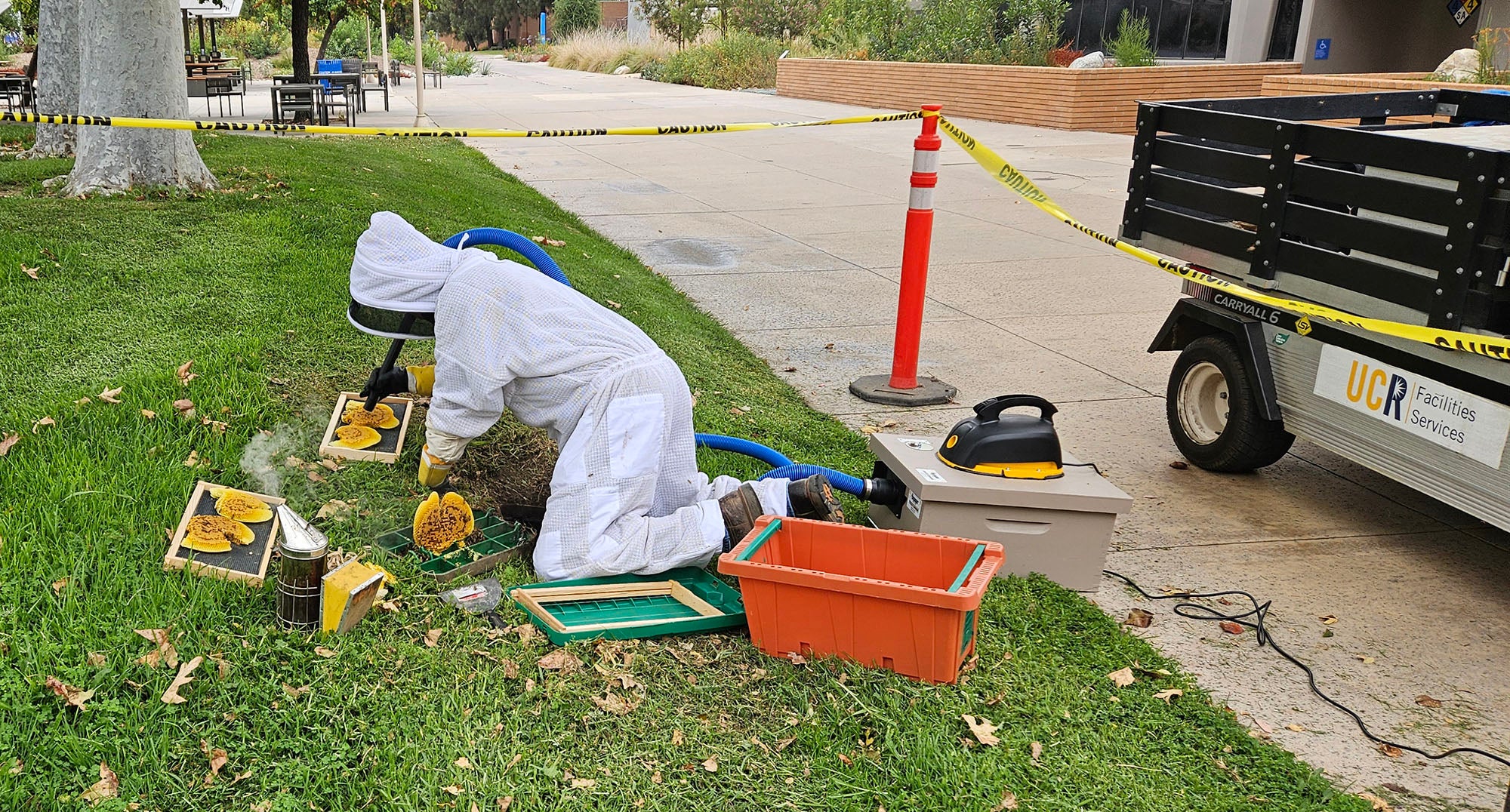
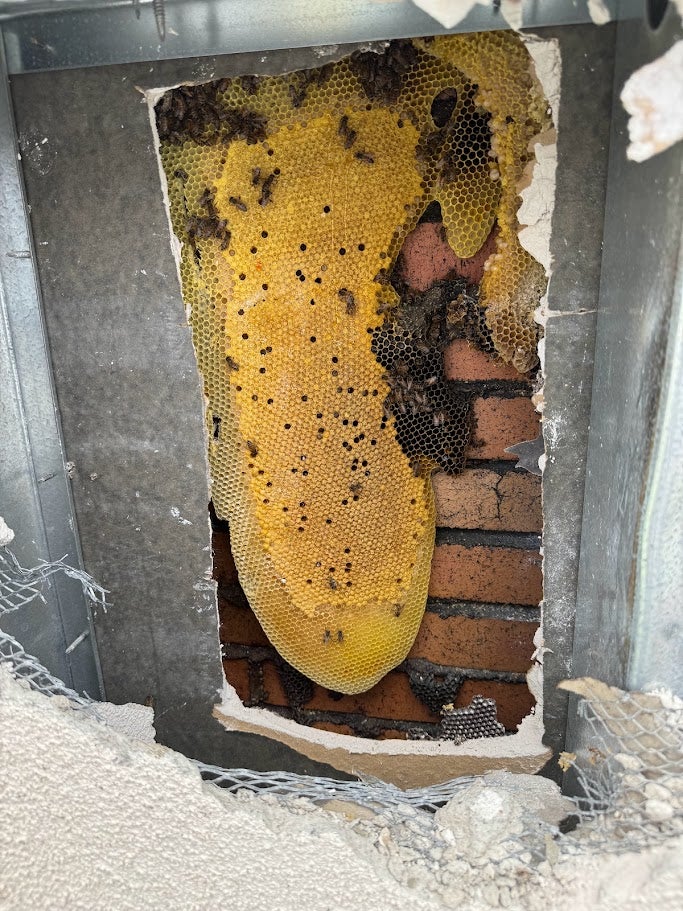
On the ground, Starling and Ishida work closely with campus staff and faculty, such as entomologists, to identify insects and solve complex campus problems. For example, Starling protects local bee populations by relocating hives from high-traffic areas, like parking lots, instead of spraying them when possible.
To relocate a hive, Starling uses a smoker to calm the bees, vacuums them into a specialized holding box, and captures the queen. He places the queen inside a temporary hive, transfers the remaining bees, and delivers the colony to a campus apiary. Under the guidance of the Bee-Friendly Campus initiative, this partnership with the Bee Campus group actively saves local bee populations.
The team applies similar care to protect UCR's agricultural heritage. In September, Facilities Services worked with Agricultural Operations to inject the soil at the base of 250 campus citrus trees. This treatment targets the Asian Citrus Psyllid to prevent the spread of Huanglongbing disease.
“Pest control always requires a risk-benefit analysis,” Starling said, explaining that the team must decide if spraying a chemical is more beneficial than the presence of the pest itself.
To keep campus partners aligned, Starling will host a half-day IPM training session this December. Representatives from the Riverside County Agricultural Commissioner, Agricultural Operations, Environmental Health & Safety, and faculty will discuss groundwater safety, shifting pesticide laws, and strategies to combat the South American Palm Weevil.
Campus community members can view the complete IPM policy and the list of approved pesticides at facilities.ucr.edu/our-support-services/pest-control.